Thursday, 20 August 2015

Patriots - Review (Edinburgh Fringe Festival 2015)


Patriots is a refreshing piece of up-to –the minute writing which takes well-known stories from recent headlines and  gives them a sense of humanity in a series of short ‘techno-fables’.

The play opens with a carefully edited montage of different clips from news programmes over the last year or so, broadcast on four retro television sets positioned on stage. The TVs give a wonderfully retro edge to the modern writing and give a sense of the timelessness of the stories unfolding onstage.

It is clear that the play is broken down into distinct sections, but at times this made the overall effect feel a little disjointed. There were clearly connections to be made between the different storylines, otherwise the title ‘Patriots’ would not have been applicable to all of them, and yet these connections were largely ignored. It worked very well to have a story about real human connection as a linking piece in between scenes of heartlessness and professional desperation, but more could have been done to draw parallels between each scene. 
But that is my only criticism. The individual performances were incredibly strong from all four cast members, but Oliver Lennard particularly stood out in terms of delivering levels of raw emotion in an otherwise cold theatrical context.

The stand-out scene has to be an interaction between a member of the SNP and an automated phone line. This was definitely my ‘scene of the fringe’ this year, and I struggle to think of a wittier scenario that I have seen before in any medium of political satire. The phone engages the character of Ian, played by Stephen Quinn, in a game of Deal Or No Deal, where the boxes contain pros and cons of Scottish independence and the banker offers independence deals based on the arguments raised in each round. It is a beautifully staged, wonderfully acted and completely refreshing up-to-the-moment piece of theatre which is incredibly relevant to many an audience at this year’s fringe.

So all-in-all, this is an excellent play which is brought to life in style by a fantastic cast. You should definitely go and see this play before the end of their run, they deserve to have a full house every night. 5 stars.


Patriots is on a Paradise in the Vault at 20:35. Their last performance is on 22nd August so make sure to catch them before then. 

The Year of the Hare - Review (Edinburgh Fringe Festival 2015)

The Year of the Hare is an eccentric and fiendishly mad piece of theatre. It is brought to you by Ryhmateatteri theatre company and a cast of four talented and energetic actors who clearly enjoy every minute of their time spent performing this tale.

The play itself has the feel of a 21st century fable, warning your average corporate businessperson of the dangers of losing your imagination and your connection with nature.

The play starts extremely strongly, with clever staging and use of props telling the story of a man fed up with his job and his marriage, who ends up punching a trainer at a conference and crashing his car off the road. He subsequently injures a hare which is befriends and takes with him to travel through Finland. It is an amusing concept which works within the context of the play, as daft as it sounds.

I found myself thoroughly enjoying the first half an hour or so. I was ready to give it a rave review and to tell everyone I know about its mad but fun ideas, use of the projector and multimedia elements, dozens of wig changes and the interesting and heartwarming overarching themes and messages. However, something changed after the first half of the show, after a karaoke scene which lasted for four songs. The idea was great but it lasted far too long, and I could feel the audience around me slipping into boredom and slowly distancing themselves from the action on stage. The story took a strange turn, with Vatanen running off to the wilderness and a scene involving a thieving raven. This joke was funny to begin with, but the scene was far too long and the joke became tired quite quickly.


The ending clawed it back again, going out on an excellent and clever video montage before the metaphorical curtain came down. If the script had been cut to a make a play of between 45 minutes and an hour, I would have had barely a bad word to say about this show. But sadly, the concept was strung out for far too long and despite excellent individual performances from the whole cast, the performers couldn’t make up for some fundamental scripting issues. 

The Year of the Hare is on at the Pleasance Dome at 18:45. 

Sunday, 9 August 2015

Mad Women In My Attic! - Review

This is going to be a very tricky review to write, not because I didn’t enjoy the show, but because I went in not knowing what to expect, and came out feeling that wonderful sense of artistic confusion which everyone who visits the fringe should experience at some point. As essential as this feeling is, it is not an easy one to explain or describe, but I shall do my very best.

The concept is fairly simple: a cabaret billed as ‘a trawl through the troubled minds of musical theatre’s most famous female characters’. Salvi plays the part of a woman in some sort of an asylum, performing a wonderful collection of show tunes sung by the most unstable of musical theatre’s female characters. Complete with witty props, speedy on-stage costume changes and audience participation, it is an interactive and exciting show which deserves to do well at the fringe.
The interactive audience participation elements of the performance were highly entertaining for both those chosen to participate and those watching from the relative safety of one of the pews. Salvi had to work hard to warm the audience to the mad sense of chaos and to bring us to relish the unexpected, but she stuck at it and by the end of the show everyone was eating out of her palm.

I think the venue very much changes the tone of the performance. It shouldn’t make a difference, but some part of my brain was distracted by the imposing church architecture reminiscent of strict rules and regulations, and I found it difficult to let go of any inhibitions holding me back. To make the most of this show you will have to thoroughly immerse yourself in the mad world which Salvi has constructed, and pretend that you are in a cosy underground bar at 10 o’clock at night, with a bottle of wine on the table.

Once you have let your hair down, you will be thoroughly rewarded with a highly energetic and engaging performance from a truly exceptional singer. This is not a show for the shy and retiring, but if you are looking for belting tunes and an uplifting message to brighten up your afternoon, this is a show for you.


Aug 7-8,10,12,14-15,17,19,21-22,24,26,28-29,31 at 18:00
Aug 11,18,25 at 18:30; Aug 16,23 at 20:30 
St John's Church, Princes Street, Edinburgh, EH2 4BJ (Church at St John's)
Ticket prices £10.00 (£8.00)


http://just-festival.org/events-at-just-festival-2015/2015/4/7/mad-women-in-my-attic-i-monica-salvi-i-musical-theatre 

Friday, 31 July 2015

All Things Cultured Hits The Fringe!

It’s been a while since I have written any reviews, but I have been exceptionally busy getting things ready to take Things Can Only Get Bitter to this year’s Edinburgh Festival Fringe (I know it’s a rubbish excuse, but it’s the only one you’re getting). On that note, you should definitely go and see Things Can Only Get Bitter, or check out the blog at thingscanonlygetbitter.blogspot.co.uk.

But since I will be at the fringe anyway, I thought that I would hop back aboard the blog train, and review the shows which I go and see. With just a few days to go until the beginning of the festival, I cannot wait to get in the car and make the 8 hour drive north to join in the madness!

If you have a show which you would like me to review, please send your press release to felicityjbox@gmail.com. I can’t promise that I will get to see everything, but I will do my very best! Reviews will be posted on here as soon as possible after I have seen the show, and I will notify you by email to let you know that the review has gone live.


Thanks for reading and happy fringe!!! 

Wednesday, 13 May 2015

A review of Murder Most Unladylike by Robin Stevens

It’s amazing to think that a girl’s boarding school in the 1930s could sound quite so much like the prep school I attended at the very beginning of the Twentieth Century, but it seems like some of the these values will always be engrained into parts of the British education system. I did find it eerily coincidental that the book includes a character called Felicity and that I had a games teacher called Mrs Hopkins when I was at school, too. Fluke details aside, I think that everyone, children and adults alike, will find something they can relate to in this very easy going novel. We might not all be the daughters of Lords or find ourselves in a different country miles away from our families, but we do all know what it feels like to be an outsider trying to fit in.

The story is told from the point of view of Hazel Wong, a foreign student who gradually becomes part of the institution herself. We’ll forgive the author for choosing a name which sounds an awful lot like Hazel’s country of origin, Hong Kong. There is a lot more to her characterisation than being purely an Asian stereotype.

There is a strong anti-bulling message which is refreshing to see in books for children and comforting to read to as an adult. The book promotes all sorts of lessons to its readers: women can be strong; children can know as much as adults do; it’s not ok to persecute others for being different; you should never be afraid to stand up to your friends and things may not always be as they seem. That’s quite a lot of moral messaging to cram into a relatively short murder mystery!


Murder aside, this representation of school in England is not one which every reader will immediately recognise. The boarding school rhetoric and the sheltered bubble in which the girls live is not an accurate portrayal of the average education in Britain. But not all fiction needs to be entirely representative. There is a sense of nostalgia in the text, and the boarding school setting makes it much more likely that Wells and Wong’s Detective Society could actually prosper.

I grew up reading Enid Blyton and JK Rowling and my fictional escapism was often located in boarding schools in the country. The experiences of these children were always wildly different from my own but that’s why I enjoyed reading the books. I want to avoid saying that Murder Most Unladylike is Malory Towers meets Sherlock Holmes, it is much more than that, but I can’t get the image of Daisy and Hazel running around in deerstalkers and hiding drawing pins on teachers’ chairs out of my head.

It’s not a gritty, hard-hitting novel which deals with the injustice of the education system in Britain, but it is jolly good fun and a very entertaining read. I will certainly be buying the next books in the series.

Sunday, 10 November 2013

The Magic of Stories

W B Gooderham has recently published a book called ‘Dedicated To’. This book is a collection of the annotations and inscriptions found lurking beneath the covers of second hand books. Sadly, since I am currently living in Mexico and Amazon.com has yet to reach us out here, I have no way of getting hold of a copy any time soon, but I cannot wait to look inside.

I have been a fan of stories ever since I can remember. We still have bookshelves lined with the stories that I was told and that I read myself when I was too young to have many of my own. As I grew up, I fell in love with telling stories. I joined a drama club and I took part in the physical retelling and communication of stories live in front of audiences. I had fierce nightmares because my brain wouldn’t dare stop telling stories even when I was asleep.

I grew up more, and began to study literature. To understand the art of the story, the science of the story. I also study language and the art of communicating those stories. When I moved to Mexico, my family came to visit and my Dad said to me that he wasn’t surprised that my Spanish had improved dramatically in a short space of time because he knew that I wouldn’t be able to survive if I couldn’t communicate my stories to others.

And for all of these reasons I love the second hand bookshop. For me it is the perfect image of the story. Not the book. The story. Because second hand books tell more than just the story written in their pages. They hold in their chapters the imprint of somebody’s life. The person who owned that book read that story, and in some way, however large or small, it will have affected them. There must be a story behind how they got the book, whether they read and why they let it go. As with any story the possibilities are endless, and we will never know for sure exactly how these stories unfolded. But for me it doesn’t matter. The story lives on in the book, which may pass from reader to reader, generation to generation in a strange immortalising of not just a chapter in a novel, but in a chapter of someone’s life.


For me WB Gooderham’s recent publication offers an insight into this secretive, mysterious world of the dual-story potential of second hand books. And I cannot wait to begin my story by buying it. 

Saturday, 19 January 2013

Boris Godunov, 9th January, Swan Theatre, Stratford-Upon-Avon

Boris Godunov forms the second part of this season’s A World Elsewhere trilogy at the RSC and marks Michael Boyd’s last production as Artistic Director. The first ever production of Pushkin’s little-known play in English, is by no means a weak exit for Boyd.

Lloyd Hutchinson as Boris Godunov – photograph by Ellie Kurttz


He was of course the man who brought us the memorable histories which began the Complete Works Festival, and echoes of this epic cycle are visible throughout the performance. The play itself works in much the same way as the histories, in that it tells the story of an earlier period of Russian history. The script has blood, treachery, death, deceit and treachery, pretty much everything you would expect in a history play. In a question and answer session with a selection of actors and the Assistant Director of the show, Lloyd Hutchinson described the play as ‘a love letter to Shakespeare’ and there are notable references to many of his works, including Julius Caesar, Henry V, Richard III and Coriolanus.

But Boris Godunov offers something unique from these plays: it has comedy. Whilst some of Shakespeare’s denser works offer a few moments of humour in the course of the production, Adrian Mitchell’s adaptation features comedy from beginning to end. Somehow it cleverly combines physical and verbal comedy on stage with tragedy, so that one minute you are laughing, which Boris sat in the stalls with his arm round the shoulder of an audience member and the next minute you are mourning the death of his men in combat. Boyd capitalises on the comedy in the script and creates physical comedy on stage too. My particular favourite moment was the creation of the fountains where Grigory arranges to meet Maryna. The fountains consisted of four women standing with bowls on their heads, and the moving water was made by men pouring it out of jugs into the bowls. This ingenious staging created the sound and effect of fountains on stage but maintaining a comedic undercurrent to the business transactions playing out in the scene.

The actors were, as always, fantastic. But particular mention must go to Lloyd Hutchinson in the title role as Boris, who shone out as an incredible performer, who kept the audience onside at every moment. Another special mention goes to Lucy Briggs-Owen as Maryna, whose interpretation of a neurotic and scheming princess rivalled any portrayal of the spoilt daughter of a king.

Boyd managed to stage a production which was incredibly entertaining, informative and clever in so many ways. But it also serves as a comment on modern day Russia. Towards the end of the play, the actors change from old fashioned military uniforms into smart modern suits, with guns instead of knives, and smart phones and earpieces to complete the look. Boyd has made an entertaining production with an extremely relevant political overtone. Shakespeare would be proud.

Boris Godunov is followed by A Life of Galileo which I imagine will be just as impressive as this production. Be sure not to miss out.

Wednesday, 19 December 2012

My personal highlights of the National Gallery, Trafalgar Square, London

On arrival at the National Gallery in London, an incredible building in itself with its famous columns and steps, I was offered the opportunity to hire an audio guide for the duration of my visit. The audio guide, incidentally, is well worth getting. For just £3.50 (£2.50 for concessions) you are given commentary on most of the sights that the National Gallery has to offer. This was, for me, well worth the money since the admission is free in the first place. The guide came with a leaflet taking you through a 60-minute quick tour of the highlights of the gallery’s exhibits. This leaflet, however, I would ignore entirely.

Well perhaps ‘entirely’ is unfair. It certainly tells you where to find the works of the biggest names and the paintings which we have all seen in countless reproductions. If these famous ‘masterpieces’ are what interest you then the leaflet gives you a great route through the gallery.

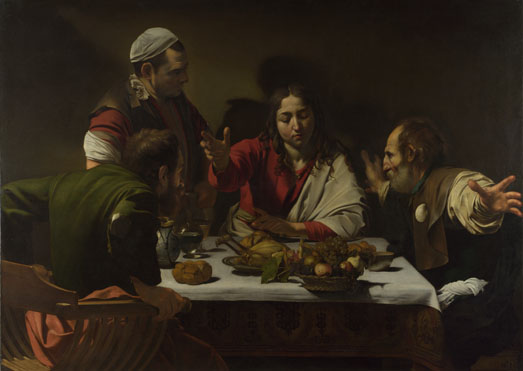
The Caravaggio on display, The Supper at Emmaus, is as technically brilliant as all of his works, but as the daughter of a seasoned Caravaggio enthusiast I have seen his works exhibited all over the world, and I think it is safe to say that the National Gallery does not possess one of his greatest.
Michelangelo Merisi da Caravaggio: 'The Supper at Emmaus'

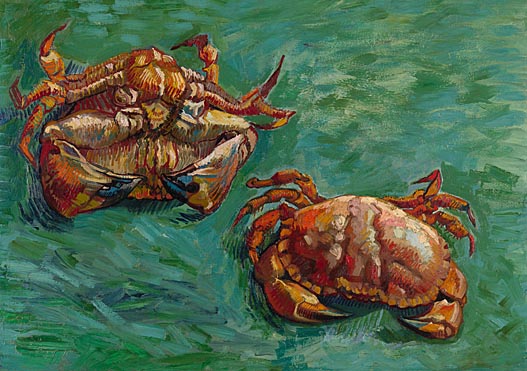
It is of course amazing to see such iconic works as Van Gogh’s Sunflowers in their original form; they almost always surpass expectations. I am not personally a huge fan of Van Gogh in general and it certainly wasn’t his sunflowers which caught my gaze. Instead I was much more attracted to his still life of Two Crabs whose orange shells set against a brilliant blue-green background really appealed to me. It seemed to display much more technical skilled than his other works.
Vincent van Gogh: 'Two Crabs'

Of all the ‘big names’ on display though, it was Rousseau’s Surprised! which really blew me away. The famous tiger in the jungle is so much bigger than I have ever imagined and therefore much more impressive. The lashing rain and the tropical storm in the background are much more obvious in the original and really add an extra dimension to the painting.

Henri Rousseau: 'Surprised!'

For me though, part of the beauty of wandering around an art gallery is the waiting for something to catch your eye and to surprise you. It was the pictures I’ve never seen before, by artists I’ve never heard of which I found the most exciting. If you let yourself wander out of the main network of rooms and inter the smaller corners of the gallery you will find the small closet-like spaces in which hang just 4 or 5 paintings. Tucked away in these corners you’ll find some real treasures and the peace and quiet to really enjoy them.

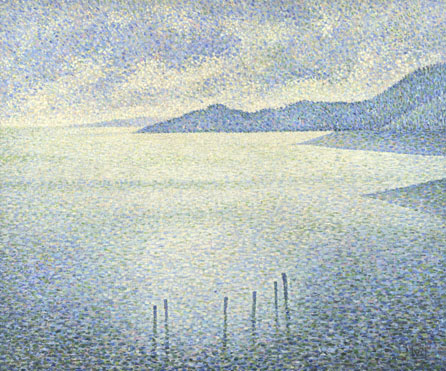
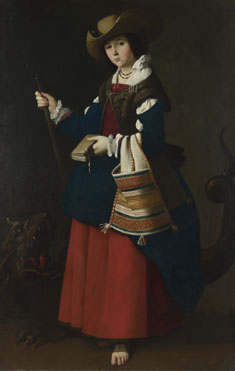
Shown below are just a few of my personal highlights of the National Gallery and are in my opinion well worth a visit. Most of them also have an audio guide entry which will explain the painting and the artists in more detail than the paper plaques next to the pieces themselves.

Théo van Rysselberghe: 'Coastal Scene'


Francisco de Zurbarán: 'Saint Margaret of Antioch'


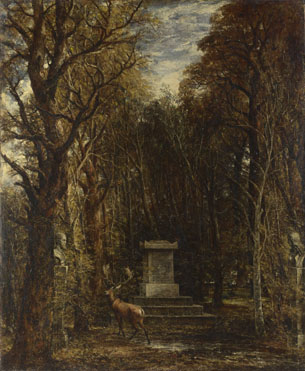
John Constable: 'Cenotaph to the Memory of Sir Joshua Reynolds'


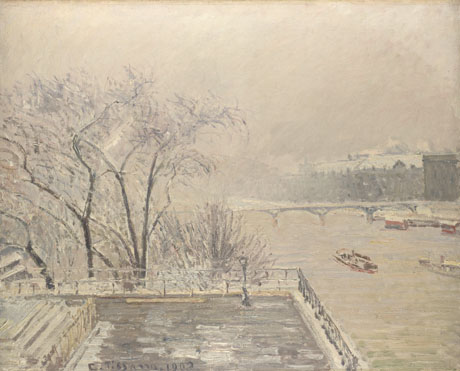
Camille Pissarro: 'The Louvre under Snow'


Monday, 27 August 2012

Apethorpe Library

This small village has its library inside an old telephone box. I want one!!!

Sunday, 26 August 2012

'The Comedy of Errors', RSC, Stratford-Upon-Avon - 25th August 2012


Having never read, studied or watched the play before there was very little that I knew about it before walking into the theatre last night to watch the RSC’s current production of ‘The Comedy of Errors’. This meant that I had no preconceived notion of how the play should have been done and no benchmark to compare the production to. I was a very impressionable audience member but I feel that even a lover of the play as a text and as a production could not help but fall in love with this production.
I was blown away by the set. The RSC’s imagination seems to know no bounds and they have made no exception for this production. A huge rusty crane hangs over the stage and parts of the stalls way up in the gods and the front part of the stage contains real water with broken decking around the edges. Barrels, crates and sacks completed the illusion of the busy dockyard and Dromio and Antipholus’s (of Syracuse) first entrance was made inside a crate which came swinging along the crane and was dropped on to the stage.
I think plays are made by their openings. You can tell whether a production is going to be good or great within the first few seconds. This particular production of Shakespeare’s comedy opened in complete darkness, you could hear movement on stage but it was impossible to see where the actors were. When the lights went up, Egeon’s head was being forcibly held under 6 inches of water in a fish tank by an armed guard. It was one of the most striking openings to a play I have seen in a long time and from that moment on, I knew that this production would be one I would not regret seeing.
The acting was exceptional as always, both sets of twins were fantastic but special mention has to go to the two Dromios, played by Felix Hayes and Bruce Mackinnon, who not only looked incredibly similar (all credit to the wardrobe department) but all of their movements and characteristics were mirrored by each other to the extent that context alone told the audience which one was which. Jonathan Slinger, an actor who has bowled me over dozens of times in his performances at the RSC, appeared on stage for all of 3 minutes but was utterly fanastic (as ever) in his role as sadistic Dr Pinch, sent to cure Antipholus and Dromio of their ‘madness’. The sparks flying from the jump leads used to electrocute the protagonists made for a horrifying concept, the execution however was incredibly funny, with some ridiculous reactions from Felix Hayes and Stephen Hagan. My highlight of the show however had to be Kirsty Bushell’s portrayal of Adrianna. Her performance flicked between crazed eccentricity, hopeless desperation, violent rage and giddy delusion to create a character which was utterly compelling to watch.
All in all, this is a fantastic production and definitely worth a watch. So maybe the stage violence is completely unbelievable at times and it is slightly hard to believe that the two Anitpholus’s are even related, let alone identical twins but the acting is incredible, the set is stunning and the production will have you laughing from beginning to end. 

Thursday, 19 July 2012

The Woman Who Died A Lot by Jasper Fforde


Regular readers of my blog might have noticed that I am a rather large fan of Jasper Fforde and his work. A while ago I reviewed his dystopian novel ‘Shades of Grey’ and I also wrote an article about his recent talk on his latest book launch for ‘The Woman Who Died A Lot’. I think it is therefore safe to say that I already had a fairly high expectation of the seventh instalment of Thursday Next’s adventure, well before it was released.
As a general rule, I tend to try to avoid hype surrounding popular culture. Whether it’s the latest Spiderman film or a certain current bestseller, I find that they rarely live up to expectation. The hype I was subjected to surrounding Fforde’s latest work was, however, entirely self-induced so there was no getting rid of it! But I am pleased to announce that Mr Fforde easily stepped up to the benchmark of his other novels and eagerly surpassed it.
Whilst listening to his talk at his book launch last week, a few things he announced initially set alarm bells ringing in my head. I thought that four plot threads might have been just one too many; Fforde’s dreamt up worlds and scenarios often require concentration and a pinch of salt at the best of times without extra storylines to handle. And I was worried that moving Thursday back away from the Bookworld would detract from the wonderful realm which Fforde has worked so hard to create so beautifully artistically. I thought I would miss the unending literary allusions and cultural references.
I needn’t have worried though. What I got when I opened the cover was probably the most exciting and entertaining instalment of Thursday’s life so far. The concentration of the storylines (all four of them)  in and around the family home in Swindon and Thursday and Landen’s two teenage children adds a warm reality to the novel, making all the deranged theories of ‘madeupions’, ‘mnenomorphs’ and smitings that little bit more credible. And Thursday is of course stationed in the next best place to Bookworld; a library.
And yet the tone of credibility which Fforde adds to this novel doesn’t detract from the sense of the ludicrously ridiculous which he establishes in all of his novels. The ideas of synthetic humans designed to have superpowers but to live only for one day and that the exact location of a smiting can be calculated according to precisely how much sin is concentrated in the area are utterly ridiculous and yet utterly ingenious. There are many more treats of this nature embedded throughout ‘The Woman Who Died A Lot’. And these treats are exactly why losing yourself in one of Fforde’s novels is always such a delight! So savour them, ration your reading, otherwise you’ll only want to start over and read the whole thing again, as soon as you’ve read the last word.
I eagerly await Thursday’s return, at some point in the future , in ‘Dark Reading Matter’. 

Monday, 16 July 2012

#bookbread

Today on twitter, #bookbread is trending. I've had great fun coming up with a dough-y twist on classic literature. Here are a few titles I've managed to modify:

Brighton Roll - Graham Greene
The Hound of the Bakervilles - Arthur Conan Doyle
A-scone-ment - Ian McEwan
The Rye Who Loved Me - Ian Flemming
The Hitchhiker's guide to the Granary - Douglas Adams
Batch 22 - Joseph Heller
Harry Potter and the Philosopher's Scone - JK Roll-ing
Scone with the Wind - Margaret Mitchell

For further altered titles, check out #bookbread on twitter. Feel free to comment below if you have any more ideas!!

Friday, 13 July 2012

Jasper FForde Speaks – Waterstones, New Street, Birmingham


Jasper FForde’s new novel ‘The Woman Who Died A Lot’ came out yesterday and Mr Fforde is touring bookshops across the country in order to promote it. The book forms the seventh instalment the series starring Thursday Next, a literary detective in a parallel universe where time travel was possible, dodos have been brought back from extinction and physics is rather different. This particular chapter of the story apparently brings us more delights, such as the rise of Yo Toast outlets, the smiting of cities by an angry deity, some rather feisty librarians with the power to conduct dawn raids to holders of overdue books and ornamental hermits. The novel moves away from Bookworld and instead the action takes place in Swindon, Thursday’s home town and the action focuses more closely on her family life.
Fforde’s talk was brilliant; he is an erudite and articulate speaker with a fascinating mind. He spoke of his methods of writing, which unlike authors who meticulously plan their work, centre around a series of ‘narrative dares’, Fforde explains these to be the literary equivalent of how Scottish cuisine is built upon a foundation of culinary dares. He told us avid readers that in such times of austerity as we find ourselves in today, he wanted to give something back as an author, and so incorporated an extra plot thread into this new novel, absolutely free! This means that ‘The Woman Who Died A Lot’ (a title which may sound strange, but Fforde is extremely proud of) deals with no less than 4 simultaneous main storylines, which ensure that the book promises to be just as action-packed and exciting as its 6 predecessors.
Fforde is a walking advert for authors’ determination. He wrote 6 ½ novels before one was published, 4 of which are now available in print. It is strange to think that there was a time in which nobody thought that Thursday Next and her manipulation of literature deserved a place on the British bookshelf but Fforde continued to believe in her and his determination paid off. He now writes 2 books a year with just 140 days allocated to each one. In order to achieve this he has to spend 8 hours in front of his laptop every day, whether that day is a ‘scribblage day’ (where he forces himself to get words on the page) or a ‘combing day’ (‘prose is like hair – it improves with combing’). But his efforts do not go unnoticed. Many fans have pre-ordered their copies of Thursday’s new adventure, and I myself cannot wait to get started. Let’s hope it lives up to the hype!!

When We Are Married – Criterion Theatre, Earlsdon


‘This is Herbert Soppet all over – he couldn’t even get us married right!’

J B Priestly’s ‘When We Are Married’ might seem a strange choice for an Amateur Dramatics company to perform; a comedy in three acts set in the small Northern town of Clecklewycke. However this production marks the end of the Criterion’s fiftieth anniversary year, and mirrors the first production ever performed there, now over a half-century ago. Using the play as an anniversary celebration is particularly fitting since the action of the production centres around 3 couples, each celebrating 25 years of marriage. That is, until they find out that the pastor who ‘married’ them was not officially ordained, making their marriage vows effectively null and void.
The play is a comedy from start to end and this company fantastically exploited this. The set was brilliant, forming the front room of Alderman and Mrs Helliwell’s where all the action takes place. The room was cut in half diagonally, with the corner falling down-stage centre to make the audience feel incredibly involved, as if the seating formed the other half of the room. This couldn’t help but contribute to the sense of engagement coming from the stalls as events unfolded onstage. There were ‘oohs’ let out spontaneously as characters were slapped across the face and ‘ahhs’ as cast members came to the end of tuneful renditions of stage show classics.
Looking round the audience at almost any point in the play I could see only smiles; no yawning, watch-checking or blank expressions proving that the actors were doing a fantastic job.
Priestley’s witty one-liners were delivered with perfect comic timing and expression and the period costumes and attention to detail of the set designers made you feel like you really were back in the 40s.
But despite the slapstick humour generated by a drunkard photographer and the witty lines, Priestley’s subtle comments on contemporary life also shone through. The role of women in society and philosophical questions of marriage were carefully disguised as entertainment by cast members whilst still causing audience reflection throughout the two intervals and after the show had finished.
The group musical number to finish had the (ever so slightly) older members of the audience singing along and brought a beautiful close to a wonderful show. ‘When We Are Married’ fully deserved the full house it received.


Wednesday, 11 July 2012

Find your inner Aztec!! - A Soldier in Every Son at the Swan Theatre, Stratford-Upon-Avon


Luis Mario Moncada’s new play ‘A Soldier in Every Son’ was commissioned for the World Shakespeare Festival and attempts to tell the story of the rise of the Aztecs in central Mexico during the 14th Century in a style inspired by Shakespeare’s history plays. The play follows three tribal communities in their struggle for power in an everyday battle for survival.
The production brings together the RSC company with 6 Mexican actors from the Compañía Nacional de Teatro de México in a cross-cultural collaboration celebrating Shakespeare’s global influence.

Incredibly costumed design by Eloise Kazan


The production is, in my opinion, a resounding success. Granted, the names are a nightmare to get your head round, and the plot can be a little confusing at times, with each actor playing several parts. But the costumes, the tribal tattoos, the choreographed battle scenes in the style of tribal dancing and the incredible talent of the actors at work makes for a compelling and entertaining account of such a colourful period of Mexican history.


‘A Soldier in Every Son’ describes a period of history which is not familiar the majority of modern British audiences and therefore the cast and crew set themselves an enormous task in presenting the play in a way which was entertaining, not just educational. A feat, which I believe they performed exceptionally well; the action will have you on the edge of your seat yet all the little comic references and humorous moments will relieve some of that tension beautifully.

Cast and Crew on ‘finding your inner Aztec’

I was lucky enough to attend a question and answer session with members of the cast and crew, in which they shed a little light on how exactly they managed to pull off this mammoth task.
They explained that the play originally started off being 5 hours long, with many sections being almost a direct translation of some of Shakespeare’s most famous works. Luke Kernaghan, assistant director, spoke of the difficulty that cast and crew, along with writer Luis Mario Moncada, found in finding the play’s own unique voice through the allusions to Stratford’s literary hero. In the end, they resulted to cutting almost all of these direct references, and as star of the show Alex Waldmann quite rightly said, with a play filled with power, ambition and bloodshed, how can Moncada’s work not echo that of Shakespeare?


Alex Waldmann as Ixtlixochitl (I told you the names were a mouthful!)

The actors spoke of the difficulties they found in ‘finding their inner Aztec’, it must be hugely difficult trying to identify with people who lived in a world so far removed from modern British society.  But according to Waldmann, really small things such as never standing fully upright, and using various invented gestures instead of hugging or shaking hands helped as a constant reminder of the alien nature of this civilization.

Susie Trayling as Tecpa
So, without wanting to give too much away, you would be missing out if you didn’t get to see this show whilst it’s here. With colour, exuberance and passion A soldier in Every Son really is a new history of an ancient civilisation for a modern audience.  Catch it before it heads off to Mexico!

Tuesday, 3 July 2012

Julius Caesar


This particular rendition of Shakespeare’s famous Roman tragedy forms part of the RSC’s World Shakespeare Festival 2012. Guest actors, directors and musicians have been brought in from all around the globe to help celebrate Shakespeare’s role as a global playwright, not just a national icon. You can find out more about the festival itself by following this link - http://www.worldshakespearefestival.org.uk/about/
Gregory Doran directs a Julius Caesar set in modern Africa which echoes the recent uprisings against dictatorships which have taken place there. The setting is made obvious through the use of flags, ethnic music and a cast made up of solely black actors, although the script has not been altered and refers often to Rome.
The set itself echoes a Roman amphitheatre with large steps which lead up at the back of the stage, yet this is given a modern edge by exposing some of the reinforcements which lie beneath the concrete in a section at the back of the steps. The set was also expanded quickly and very effectively through the use of poles and fabric to form a tent in Brutus’s camp. The musicians often sat on these steps to play which provided the audience with a great view of their interesting collection of authentic African instruments.
The play seems to be fairly condensed, taking place over just 2 hours and 15 minutes with no interval, yet the fast paced action means that you are always kept on your toes.
The cast consists of a large ensemble of incredibly talented actors and Doran made use of them brilliantly. He had just the right number to make crowd scenes credible but not cluttered on stage, and the interaction between cast and audience in the 15 minutes prior to the performance helped break down the divide between stage and seating to make you feel really emotionally involved with the action unfolding in front of you. But for me, although the quality of the acting was exceptional as always, Paterson Joseph’s portrayal of Brutus really stole the show. His presentation of Brutus really brought about the duality of the character and his motives behind all of his actions. He definitely portrayed a Brutus for modern times.
The only criticism I have of the play was the lack of blood involved. I have seen a couple of productions of Julius Caesar at the RSC in recent years and all of them have resulted in the stage being awash with fake blood. Personally, the death of Caesar was not credible in the slightest since he was stabbed 6 or 7 times without even a drop of blood on his body, and yet Brutus and the other conspirators washed their hands in blood to the side of his body. When the robe of the dead Caesar was displayed by Mark Anthony later on, it had blood stains where daggers had pierced the fabric and subsequently the flesh, a big discrepancy between the events as seen on stage and those perceived to have happened. This is perhaps a minor detail, but for me it was the only fault of the performance, slightly marring an otherwise perfect production.
There are still tickets available to see the show live and in my opinion, it’s definitely worth making the journey. A definite must-see. 

Sunday, 17 June 2012

Ben Aaronovitch's spellbinding novel 'Rivers of London'


At the start, ‘Rivers of London’ appears to be your classic murder mystery novel. A few murders and a couple of random, unexplained events all leading to, one would expect, a clever and perfectly logical explanation which expertly ties all the clues. However, it soon becomes clear that ‘Rivers of London’ is far from your average, run of the mill detective novel, popular with jetsetters and holiday makers and frequently found in airport bookshops.

Whilst it does offer all the elements of your beloved detective novel, Ben Aaronovitch’s ‘Rivers of London’ is a beautifully crafted murder mystery novel, with delightful action packed adventure, making use of all the usual plot devices; car chases, work place romances but with a major twist. PC Peter Grant is not your average police constable. Fresh out of training, he is assigned to the METs department for dealing with all things mystical and so the story evolves from your stockpile crime novel into a fantastical quest to uncover a supernatural villain, encountering ghosts, vampires and river spirits along the way.

It seemed that the final conclusion to the novel was slightly rushed, all the supernatural elements coming together in a bit of a frenzy. I think I’ll put this down to my overexcitement though. I couldn’t wait to find out how exactly the resolution would come about. Every time I picked up the book I found myself reading it
compulsively, reading into the early hours of the morning to find out the fate of the lovable PC Peter Grant.

So if you’re looking for an action packed detective novel to read on the beach this summer, I’d really recommend this one. It’s a bit different; its originality makes it a really good book which you can savour, instead of one which you’ll want to leave in the hotel at the end of your stay. And for the faster readers out there, there are two more books in the series, ‘Moon over Soho’ and ‘Whispers Underground’, to keep you going all holiday. 

Sunday, 10 June 2012

One awesome book bed!


One extremely awesome bed. If I had the money, I would definitely get myself 
one of these!!!

Thursday, 7 June 2012

Jasper Fforde's 'Shades of Grey'


Jasper Fforde’s ability to write such incredibly creative and original books which subtly comments on our own society yet still proving to be an easy and highly entertaining read never ceases to amaze me.
‘Shades of Grey’ is a novel which takes place in a future world where the inhabitants can only naturally see one colour and everything else appears to them as grey. Which shade is visible to them and how much of it they can see determines their class and social standing. The action centres around Eddie Russett, a young red who has been sent to the ‘outer fringes’ to conduct a chair census as punishment for having played a prank on the son of a prefect.
It paints a picture of a wonderfully imaginative yet dystopian future to rival those created by Orwell, Atwood, Bradbury and Burgess.
This book gives you everything a great novel should and with great ease. Fforde never appears to be trying too hard. ‘Shades of Grey’ gives you a tale of romance and adventure, good guys and bad guys, of growing up and discovery laced with humour and yet all the while quietly broaching the tricky subjects of racism, social order, government rule and law enforcement.
All in all Fforde’s novel is a fantastic book which I highly recommend to any avid reader. I eagerly await the release of the sequel ‘Shades of Grey 2: Painting by Numbers’ scheduled to come out some time next year.
Jasper Fforde’s Thursday Next series continues with the release of book 7 this July : The Woman Who Died a Lot.