Saturday, 19 January 2013

Boris Godunov, 9th January, Swan Theatre, Stratford-Upon-Avon

Boris Godunov forms the second part of this season’s A World Elsewhere trilogy at the RSC and marks Michael Boyd’s last production as Artistic Director. The first ever production of Pushkin’s little-known play in English, is by no means a weak exit for Boyd.

Lloyd Hutchinson as Boris Godunov – photograph by Ellie Kurttz


He was of course the man who brought us the memorable histories which began the Complete Works Festival, and echoes of this epic cycle are visible throughout the performance. The play itself works in much the same way as the histories, in that it tells the story of an earlier period of Russian history. The script has blood, treachery, death, deceit and treachery, pretty much everything you would expect in a history play. In a question and answer session with a selection of actors and the Assistant Director of the show, Lloyd Hutchinson described the play as ‘a love letter to Shakespeare’ and there are notable references to many of his works, including Julius Caesar, Henry V, Richard III and Coriolanus.

But Boris Godunov offers something unique from these plays: it has comedy. Whilst some of Shakespeare’s denser works offer a few moments of humour in the course of the production, Adrian Mitchell’s adaptation features comedy from beginning to end. Somehow it cleverly combines physical and verbal comedy on stage with tragedy, so that one minute you are laughing, which Boris sat in the stalls with his arm round the shoulder of an audience member and the next minute you are mourning the death of his men in combat. Boyd capitalises on the comedy in the script and creates physical comedy on stage too. My particular favourite moment was the creation of the fountains where Grigory arranges to meet Maryna. The fountains consisted of four women standing with bowls on their heads, and the moving water was made by men pouring it out of jugs into the bowls. This ingenious staging created the sound and effect of fountains on stage but maintaining a comedic undercurrent to the business transactions playing out in the scene.

The actors were, as always, fantastic. But particular mention must go to Lloyd Hutchinson in the title role as Boris, who shone out as an incredible performer, who kept the audience onside at every moment. Another special mention goes to Lucy Briggs-Owen as Maryna, whose interpretation of a neurotic and scheming princess rivalled any portrayal of the spoilt daughter of a king.

Boyd managed to stage a production which was incredibly entertaining, informative and clever in so many ways. But it also serves as a comment on modern day Russia. Towards the end of the play, the actors change from old fashioned military uniforms into smart modern suits, with guns instead of knives, and smart phones and earpieces to complete the look. Boyd has made an entertaining production with an extremely relevant political overtone. Shakespeare would be proud.

Boris Godunov is followed by A Life of Galileo which I imagine will be just as impressive as this production. Be sure not to miss out.

Wednesday, 19 December 2012

My personal highlights of the National Gallery, Trafalgar Square, London

On arrival at the National Gallery in London, an incredible building in itself with its famous columns and steps, I was offered the opportunity to hire an audio guide for the duration of my visit. The audio guide, incidentally, is well worth getting. For just £3.50 (£2.50 for concessions) you are given commentary on most of the sights that the National Gallery has to offer. This was, for me, well worth the money since the admission is free in the first place. The guide came with a leaflet taking you through a 60-minute quick tour of the highlights of the gallery’s exhibits. This leaflet, however, I would ignore entirely.

Well perhaps ‘entirely’ is unfair. It certainly tells you where to find the works of the biggest names and the paintings which we have all seen in countless reproductions. If these famous ‘masterpieces’ are what interest you then the leaflet gives you a great route through the gallery.

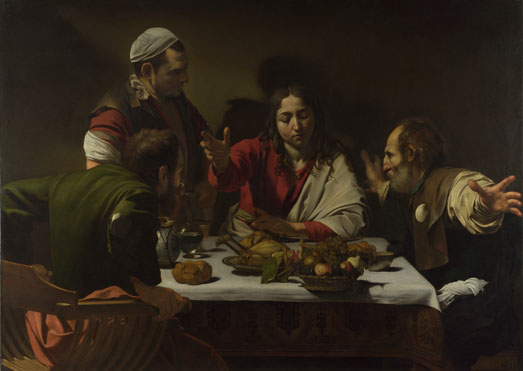
The Caravaggio on display, The Supper at Emmaus, is as technically brilliant as all of his works, but as the daughter of a seasoned Caravaggio enthusiast I have seen his works exhibited all over the world, and I think it is safe to say that the National Gallery does not possess one of his greatest.
Michelangelo Merisi da Caravaggio: 'The Supper at Emmaus'

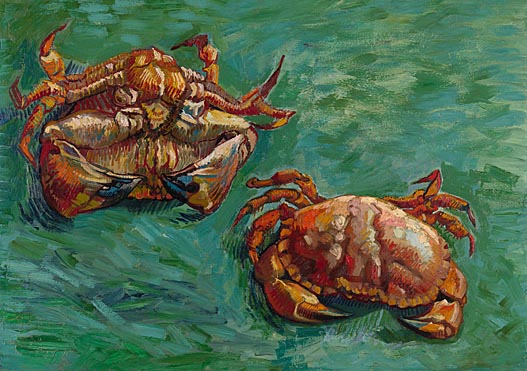
It is of course amazing to see such iconic works as Van Gogh’s Sunflowers in their original form; they almost always surpass expectations. I am not personally a huge fan of Van Gogh in general and it certainly wasn’t his sunflowers which caught my gaze. Instead I was much more attracted to his still life of Two Crabs whose orange shells set against a brilliant blue-green background really appealed to me. It seemed to display much more technical skilled than his other works.
Vincent van Gogh: 'Two Crabs'

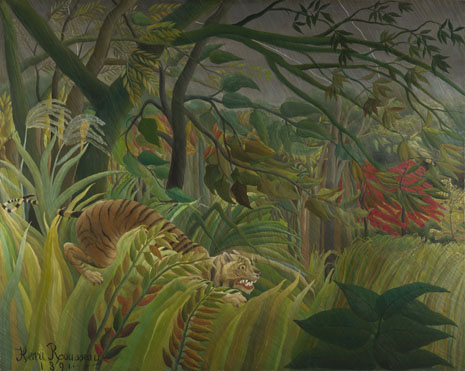
Of all the ‘big names’ on display though, it was Rousseau’s Surprised! which really blew me away. The famous tiger in the jungle is so much bigger than I have ever imagined and therefore much more impressive. The lashing rain and the tropical storm in the background are much more obvious in the original and really add an extra dimension to the painting.

Henri Rousseau: 'Surprised!'

For me though, part of the beauty of wandering around an art gallery is the waiting for something to catch your eye and to surprise you. It was the pictures I’ve never seen before, by artists I’ve never heard of which I found the most exciting. If you let yourself wander out of the main network of rooms and inter the smaller corners of the gallery you will find the small closet-like spaces in which hang just 4 or 5 paintings. Tucked away in these corners you’ll find some real treasures and the peace and quiet to really enjoy them.

Shown below are just a few of my personal highlights of the National Gallery and are in my opinion well worth a visit. Most of them also have an audio guide entry which will explain the painting and the artists in more detail than the paper plaques next to the pieces themselves.

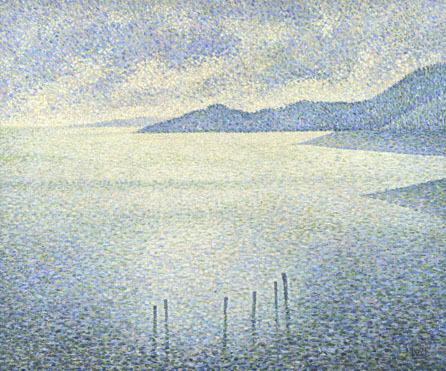
Théo van Rysselberghe: 'Coastal Scene'


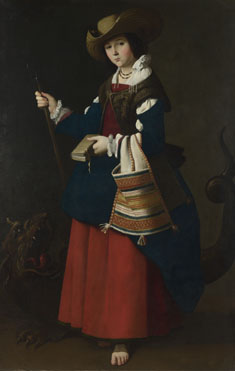
Francisco de Zurbarán: 'Saint Margaret of Antioch'


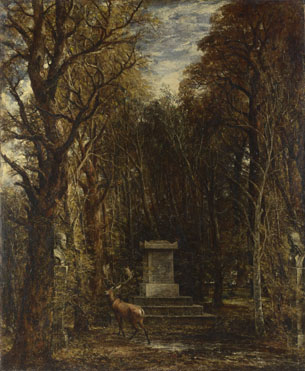
John Constable: 'Cenotaph to the Memory of Sir Joshua Reynolds'


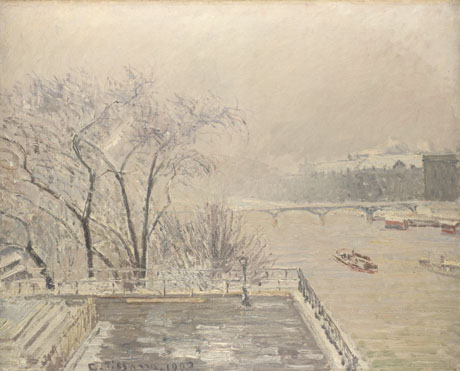
Camille Pissarro: 'The Louvre under Snow'


Monday, 27 August 2012

Apethorpe Library

This small village has its library inside an old telephone box. I want one!!!

Sunday, 26 August 2012

'The Comedy of Errors', RSC, Stratford-Upon-Avon - 25th August 2012


Having never read, studied or watched the play before there was very little that I knew about it before walking into the theatre last night to watch the RSC’s current production of ‘The Comedy of Errors’. This meant that I had no preconceived notion of how the play should have been done and no benchmark to compare the production to. I was a very impressionable audience member but I feel that even a lover of the play as a text and as a production could not help but fall in love with this production.
I was blown away by the set. The RSC’s imagination seems to know no bounds and they have made no exception for this production. A huge rusty crane hangs over the stage and parts of the stalls way up in the gods and the front part of the stage contains real water with broken decking around the edges. Barrels, crates and sacks completed the illusion of the busy dockyard and Dromio and Antipholus’s (of Syracuse) first entrance was made inside a crate which came swinging along the crane and was dropped on to the stage.
I think plays are made by their openings. You can tell whether a production is going to be good or great within the first few seconds. This particular production of Shakespeare’s comedy opened in complete darkness, you could hear movement on stage but it was impossible to see where the actors were. When the lights went up, Egeon’s head was being forcibly held under 6 inches of water in a fish tank by an armed guard. It was one of the most striking openings to a play I have seen in a long time and from that moment on, I knew that this production would be one I would not regret seeing.
The acting was exceptional as always, both sets of twins were fantastic but special mention has to go to the two Dromios, played by Felix Hayes and Bruce Mackinnon, who not only looked incredibly similar (all credit to the wardrobe department) but all of their movements and characteristics were mirrored by each other to the extent that context alone told the audience which one was which. Jonathan Slinger, an actor who has bowled me over dozens of times in his performances at the RSC, appeared on stage for all of 3 minutes but was utterly fanastic (as ever) in his role as sadistic Dr Pinch, sent to cure Antipholus and Dromio of their ‘madness’. The sparks flying from the jump leads used to electrocute the protagonists made for a horrifying concept, the execution however was incredibly funny, with some ridiculous reactions from Felix Hayes and Stephen Hagan. My highlight of the show however had to be Kirsty Bushell’s portrayal of Adrianna. Her performance flicked between crazed eccentricity, hopeless desperation, violent rage and giddy delusion to create a character which was utterly compelling to watch.
All in all, this is a fantastic production and definitely worth a watch. So maybe the stage violence is completely unbelievable at times and it is slightly hard to believe that the two Anitpholus’s are even related, let alone identical twins but the acting is incredible, the set is stunning and the production will have you laughing from beginning to end. 

Thursday, 19 July 2012

The Woman Who Died A Lot by Jasper Fforde


Regular readers of my blog might have noticed that I am a rather large fan of Jasper Fforde and his work. A while ago I reviewed his dystopian novel ‘Shades of Grey’ and I also wrote an article about his recent talk on his latest book launch for ‘The Woman Who Died A Lot’. I think it is therefore safe to say that I already had a fairly high expectation of the seventh instalment of Thursday Next’s adventure, well before it was released.
As a general rule, I tend to try to avoid hype surrounding popular culture. Whether it’s the latest Spiderman film or a certain current bestseller, I find that they rarely live up to expectation. The hype I was subjected to surrounding Fforde’s latest work was, however, entirely self-induced so there was no getting rid of it! But I am pleased to announce that Mr Fforde easily stepped up to the benchmark of his other novels and eagerly surpassed it.
Whilst listening to his talk at his book launch last week, a few things he announced initially set alarm bells ringing in my head. I thought that four plot threads might have been just one too many; Fforde’s dreamt up worlds and scenarios often require concentration and a pinch of salt at the best of times without extra storylines to handle. And I was worried that moving Thursday back away from the Bookworld would detract from the wonderful realm which Fforde has worked so hard to create so beautifully artistically. I thought I would miss the unending literary allusions and cultural references.
I needn’t have worried though. What I got when I opened the cover was probably the most exciting and entertaining instalment of Thursday’s life so far. The concentration of the storylines (all four of them)  in and around the family home in Swindon and Thursday and Landen’s two teenage children adds a warm reality to the novel, making all the deranged theories of ‘madeupions’, ‘mnenomorphs’ and smitings that little bit more credible. And Thursday is of course stationed in the next best place to Bookworld; a library.
And yet the tone of credibility which Fforde adds to this novel doesn’t detract from the sense of the ludicrously ridiculous which he establishes in all of his novels. The ideas of synthetic humans designed to have superpowers but to live only for one day and that the exact location of a smiting can be calculated according to precisely how much sin is concentrated in the area are utterly ridiculous and yet utterly ingenious. There are many more treats of this nature embedded throughout ‘The Woman Who Died A Lot’. And these treats are exactly why losing yourself in one of Fforde’s novels is always such a delight! So savour them, ration your reading, otherwise you’ll only want to start over and read the whole thing again, as soon as you’ve read the last word.
I eagerly await Thursday’s return, at some point in the future , in ‘Dark Reading Matter’. 

Monday, 16 July 2012

#bookbread

Today on twitter, #bookbread is trending. I've had great fun coming up with a dough-y twist on classic literature. Here are a few titles I've managed to modify:

Brighton Roll - Graham Greene
The Hound of the Bakervilles - Arthur Conan Doyle
A-scone-ment - Ian McEwan
The Rye Who Loved Me - Ian Flemming
The Hitchhiker's guide to the Granary - Douglas Adams
Batch 22 - Joseph Heller
Harry Potter and the Philosopher's Scone - JK Roll-ing
Scone with the Wind - Margaret Mitchell

For further altered titles, check out #bookbread on twitter. Feel free to comment below if you have any more ideas!!